Image - 2026-11-10 13:36
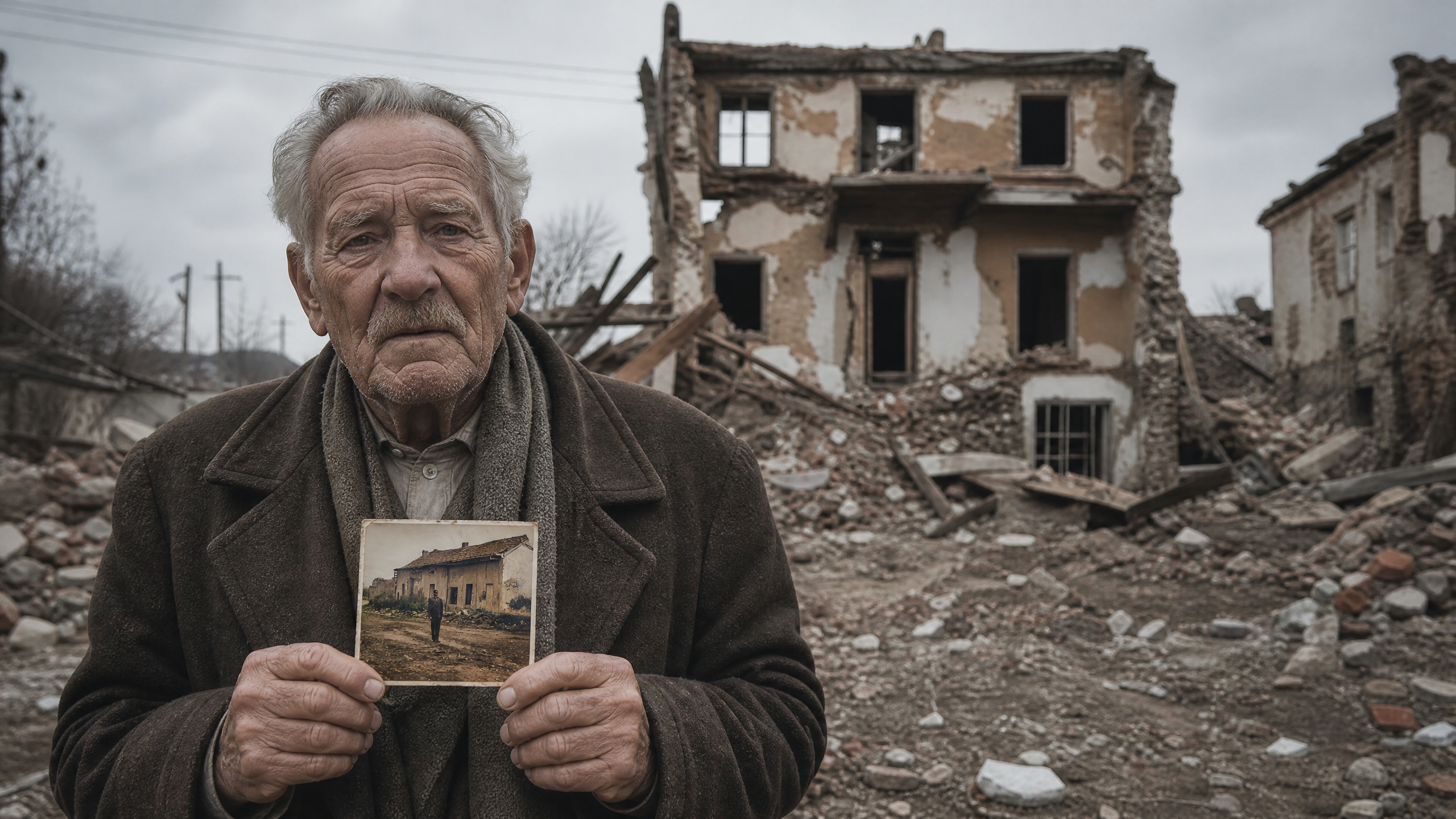
Create an ultra-realistic cinematic historical photograph, horizontal 16:9 aspect ratio, depicting an elderly man standing in front of the ruins of his former family home in post-World War II Europe. REFERENCE IMAGE: Use the attached reference photograph as the primary guide for composition, camera angle, framing, lighting, and the visual relationship between the elderly man, the photograph in his hands, and the destroyed building behind him. MAIN SUBJECT: An elderly European man, approximately 70–80 years old, standing in front of the remains of his destroyed home. He is wearing modest, slightly worn civilian clothing from the late 1940s: an old wool coat, a simple shirt, and a scarf. He holds an old rectangular printed photograph with both hands, carefully presenting it toward the camera. The man's expression is quiet and deeply emotional. He is not openly crying. His face shows sadness, nostalgia, exhaustion, and the pain of remembering a life that no longer exists. THE PHOTOGRAPH IN HIS HANDS: The printed photograph must be clearly visible and sharply detailed. It shows the EXACT SAME HOUSE that stands destroyed behind the elderly man, but photographed several years earlier, before the war. In the old photograph, the house is intact, beautiful, and welcoming. Its walls are undamaged, windows are whole, the roof is complete, and a small garden or flowers may be visible. The elderly man, shown as a younger adult, stands proudly in front of his family home. The house in the old photograph must visually match the remaining architectural structure of the destroyed house in the background. The viewer should immediately understand that these are two different moments in the history of the same place. BACKGROUND: Behind the elderly man stands the ruined remains of that same residential house. Collapsed roof, broken walls, shattered windows, exposed interior rooms, scattered bricks, and debris. The destruction is unmistakable but not exaggerated. COLOR AND PHOTOGRAPHIC STYLE: A transitional visual style between black-and-white historical photography and early color archival photography. The overall image should be partially desaturated, with subtle warm sepia and muted natural colors. Faded brown, soft gray, dusty beige, muted olive, and restrained warm tones. The old photograph in the man's hands should have slightly richer, warmer, faded vintage colors, creating a visual contrast with the pale, damaged surroundings. The image should resemble a restored historical photograph from the late 1940s: authentic film texture, subtle grain, natural light, realistic skin details, delicate imperfections, and a timeless archival quality. COMPOSITION: Horizontal 16:9 landscape frame. Medium shot. The elderly man is positioned centrally or slightly to one side. His hands and the photograph must be fully visible. Both the photograph and the ruined house behind him should be recognizable and visually connected. IMPORTANT VISUAL REQUIREMENTS: The photograph in his hands must not be blank, blurry, distorted, or illegible. It must clearly show an intact version of the same house visible in the background. Do not create two unrelated buildings. Do not turn the photograph into a digital screen or floating image. It must look like a real, physical, aged paper photograph. No flags, no national symbols, no military insignia, no political symbols, no readable text, no logos, no recognizable landmarks, no blood, no injuries, no dead bodies. EMOTIONAL MESSAGE: A man is holding the memory of the home he once had, standing in the place where it used to be. The photograph preserves what war has taken away.

Бесплатный старт · Генерация видео и картинок с ИИ за секунды
More by Splendid Caribou
См. все →


More GPT Image 2 images
См. все →