Image - 2026-11-21 22:07
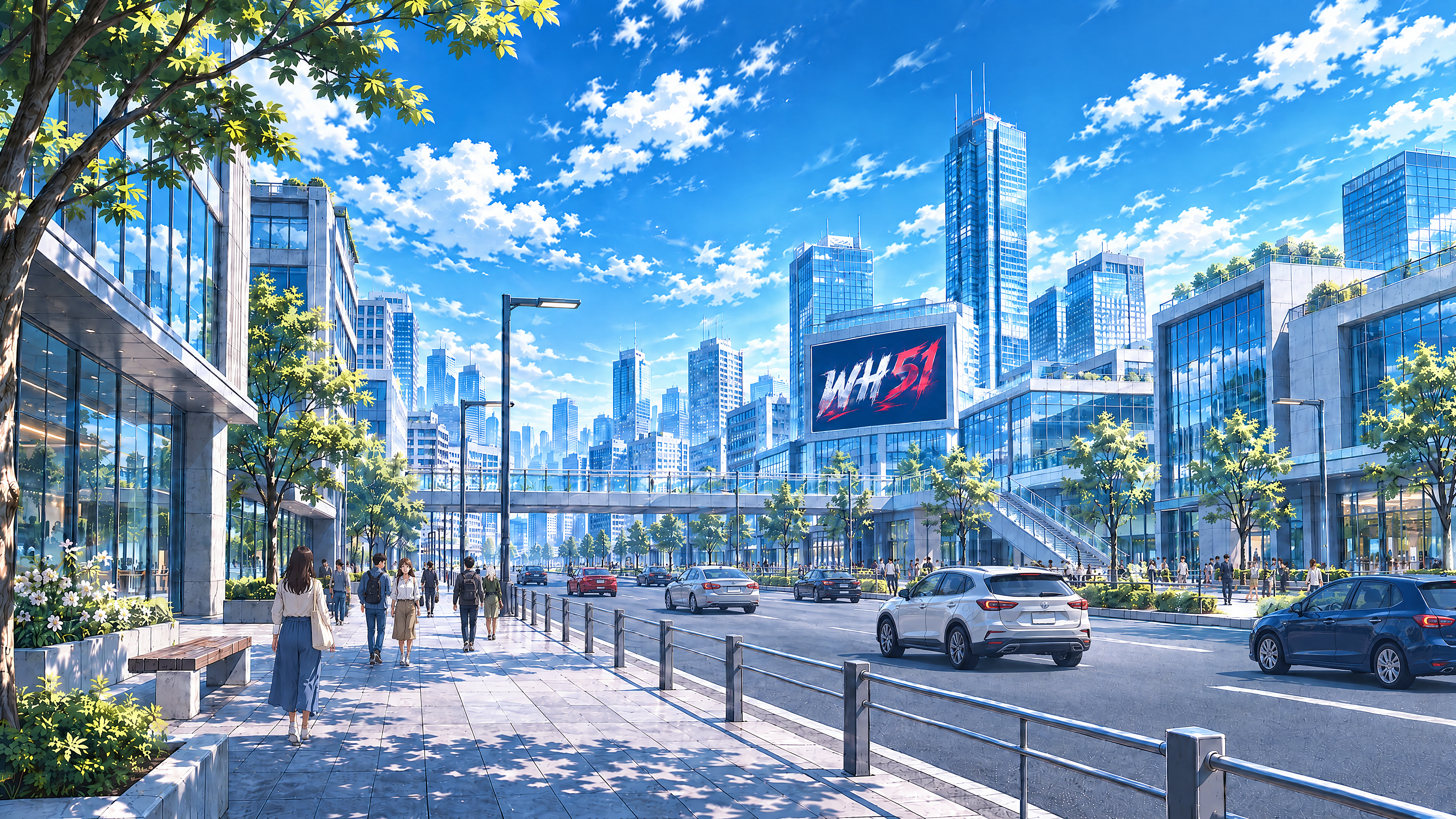
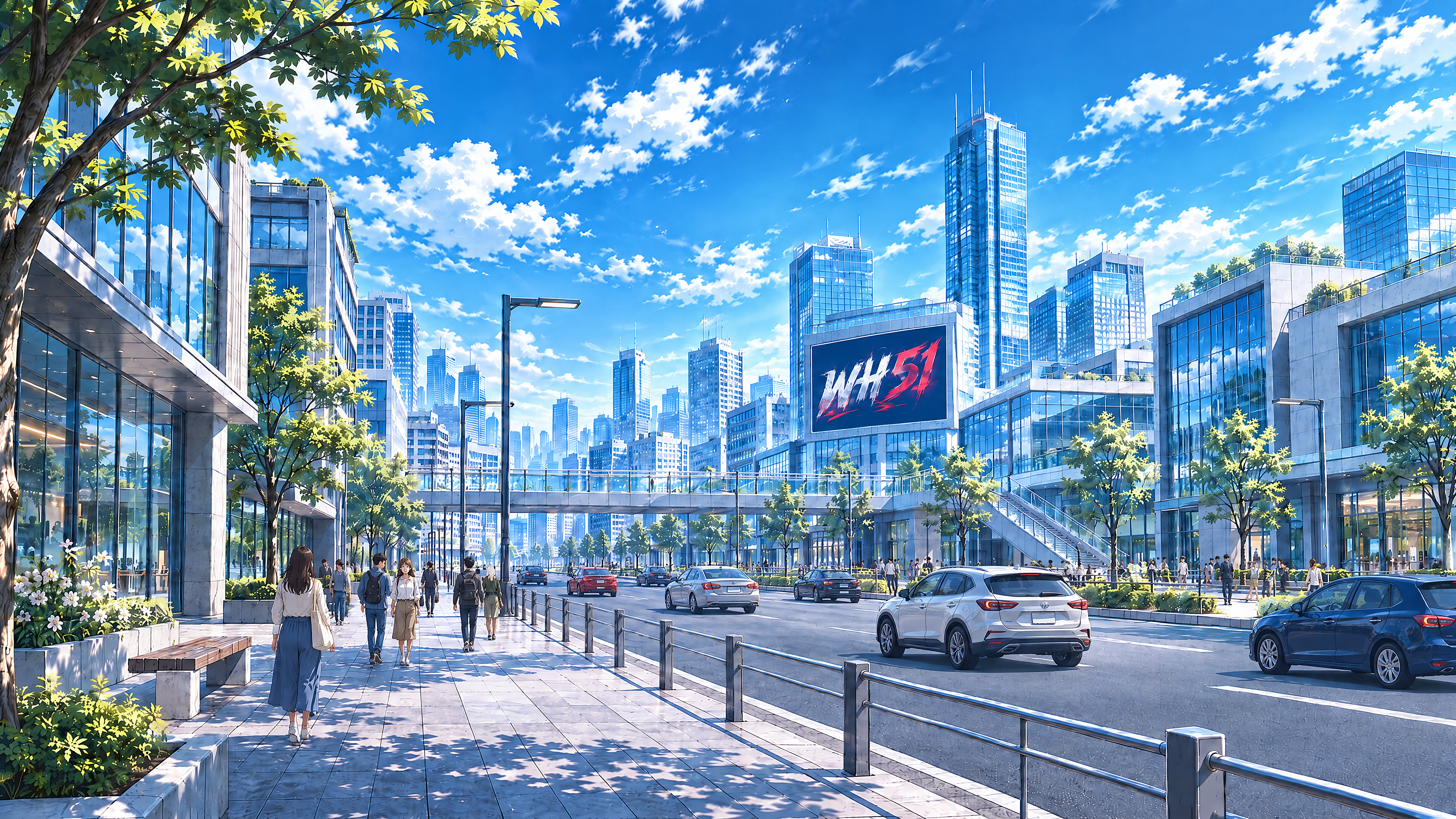
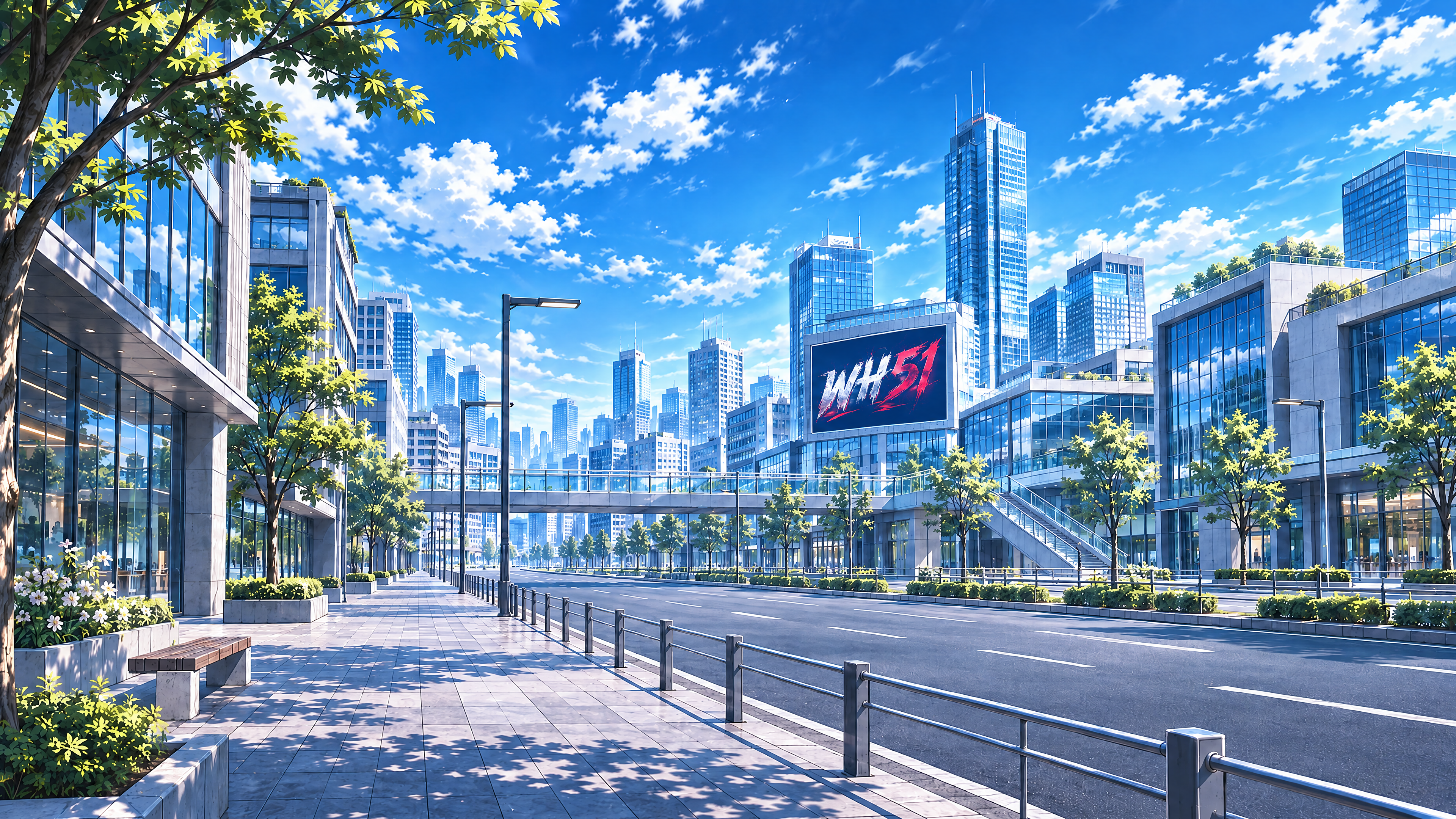
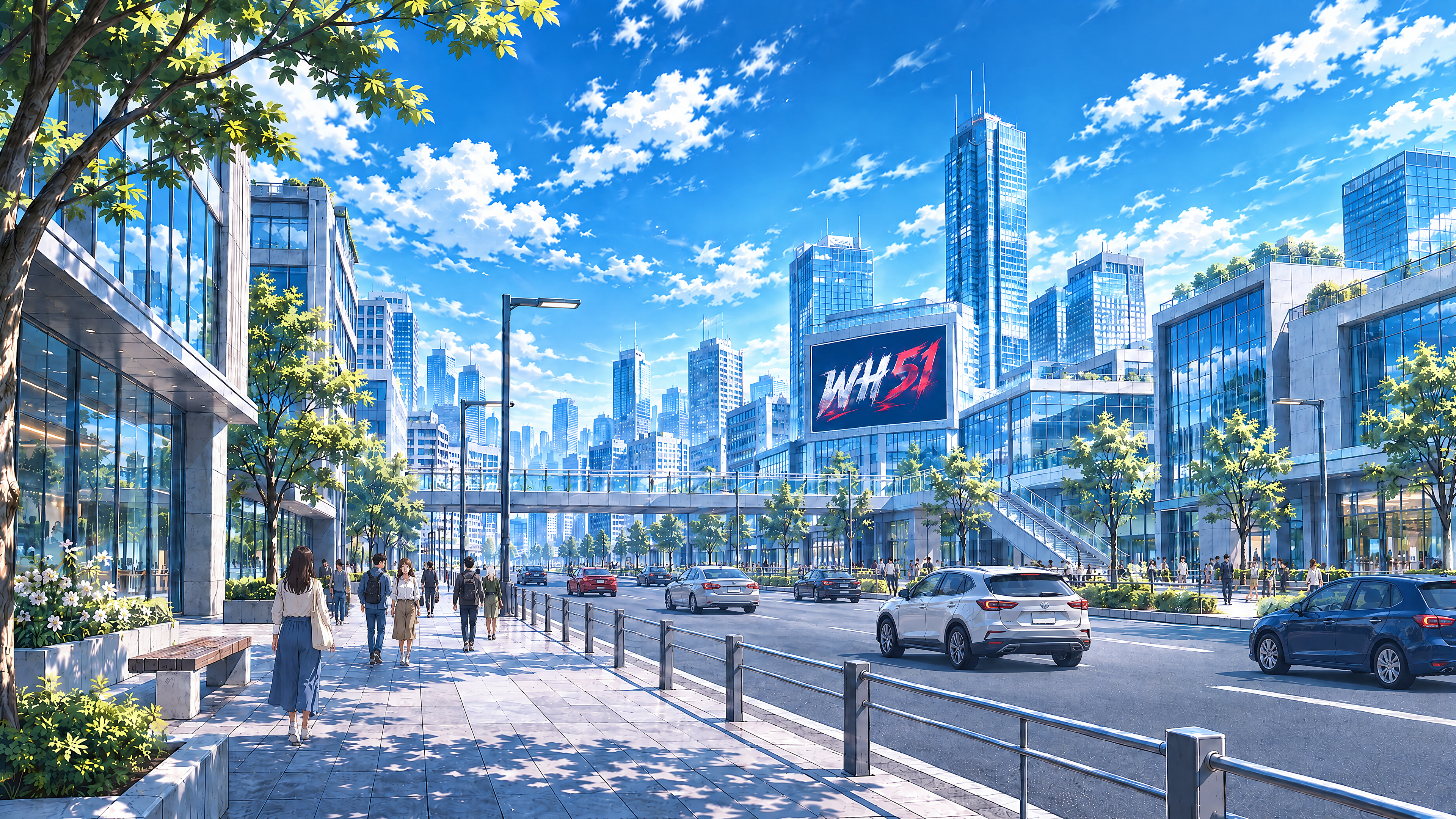
MAIN OBJECTIVE Edit Референс 1 by adding believable everyday CITY LIFE to the existing daytime urban scene. This is Scene №001, the opening establishing shot of the WH51 animated music video "Дотянуться до тебя". The existing city environment, including its architecture, street layout, camera perspective, daylight, artistic style, and large digital WH51 screen, is ALREADY APPROVED. Do NOT redesign or regenerate the scene. ONLY add a moderate number of realistic city vehicles and pedestrians to make the environment feel naturally populated, active, and alive. The result must remain a beautiful, cinematic, semi-realistic anime city scene with a clear visual emphasis on the WH51 digital screen. REFERENCE ASSIGNMENT Референс 1 — APPROVED SCENE №001 / IMAGE TO EDIT This image is the absolute authority for: - Original camera angle. - Original framing and composition. - Existing street perspective. - Existing road lanes. - Sidewalk positions. - Crosswalks and road markings. - Building positions. - Building facade designs. - Existing windows. - Surrounding city skyline. - Trees and urban greenery. - Original sunlight direction. - Original sky. - Original daytime color palette. - Approved cinematic semi-realistic anime illustration style. - The large digital advertising screen displaying WH51. LOCK THE ENTIRE EXISTING ENVIRONMENT. Preserve everything already present. Add new elements ONLY where they naturally belong: vehicles on the existing roadway and pedestrians on the existing sidewalks and crosswalks. Do not alter the WH51 screen or its logo. MAIN CREATIVE DIRECTION Make the city feel naturally inhabited. Imagine a normal, pleasant, active weekday in a modern metropolis during bright daylight. The street has moderate everyday traffic. Pedestrians move through the urban environment at a relaxed, natural pace. The city feels alive but not overcrowded. The WH51 screen remains the most important recognizable element. This should look like an ordinary moment in a beautiful, modern animated city, not a crowded festival, traffic jam, or dramatic action sequence. VEHICLES — CONTROLLED ADDITION Add approximately 6–9 modern road vehicles in total. Use a natural variety of ordinary city traffic: - Modern compact sedans. - Small city hatchbacks. - One or two modest crossover vehicles. - A balanced mixture of white, silver, gray, dark blue, and black vehicle colors. - Optionally one subdued red car as a small visual accent. Keep car designs contemporary and realistic. Do not include futuristic vehicles, sports supercars, race cars, oversized trucks, or unusual fantasy transportation. VEHICLE PLACEMENT Place vehicles naturally along the EXISTING road lanes in Референс 1. Respect the established road perspective. Use believable differences in vehicle size based on distance from the camera. A few vehicles may appear in the foreground and middle distance. Additional smaller vehicles may appear farther down the avenue. Preserve realistic spacing between vehicles. Avoid placing cars too close to one another. Do not create a traffic jam. Do not completely fill the roadway. Cars must follow believable traffic directions based on the existing street layout. Do not place cars on sidewalks. Do not place cars inside buildings. Do not place cars in impossible positions. Do not add new roads, lanes, or intersections. Make each vehicle physically grounded on the dry asphalt with realistic contact shadows. VEHICLE VISUAL ACCURACY Every vehicle must have: - Coherent body geometry. - Four correctly positioned wheels. - Natural windshield and window shapes. - Believable proportions. - Realistic wheel contact with the road. - Appropriate daytime lighting. - Consistent perspective. - Clean anime-style illustrated surfaces. Avoid: - Deformed cars. - Fused vehicles. - Missing wheels. - Extra wheels. - Floating cars. - Duplicated car parts. - Unnaturally elongated bodies. - Excessive photographic reflections. - Unrealistically glossy paint. Use the same cinematic semi-realistic anime rendering style as the original environment. PEDESTRIANS — CONTROLLED ADDITION Add approximately 12–18 ordinary city pedestrians. Distribute them naturally throughout the existing scene. Pedestrians should vary in: - Apparent adult age. - Height. - Body proportions. - Hairstyle. - Clothing color. - Everyday casual outfits. - Walking direction. - Distance from the camera. Include both men and women. They are background city residents, not main characters. Use ordinary contemporary streetwear suitable for a pleasant, dry daytime. Avoid extremely elaborate costumes. Avoid fantasy outfits. Avoid uniforms or identical-looking crowds. Avoid duplicated characters. PEDESTRIAN DISTRIBUTION Place pedestrians in logical positions: - Several people walking along the left sidewalk. - Several people walking along the right sidewalk. - A few people naturally using existing pedestrian crossings where appropriate. - Small groups of two or three people at different depths. - Some isolated pedestrians in the middle distance. - A few tiny pedestrian silhouettes farther down the street. Maintain realistic human scale according to perspective. Foreground pedestrians should be larger and more detailed. Distant pedestrians should be smaller and less detailed. Do not arrange people in perfectly even rows. Do not make everyone face the camera. Do not create a crowd standing in the middle of the road. Do not add large foreground pedestrians who block the WH51 digital screen. NATURAL HUMAN BEHAVIOR Pedestrians should appear to be engaged in normal everyday activities. Examples: - Walking along sidewalks. - Talking with another person. - Waiting near a pedestrian crossing. - Carrying a small everyday bag. - Looking toward the street. - Casually walking in different directions. Use restrained, realistic gestures. Avoid theatrical poses. Avoid people waving directly at the camera. Avoid running crowds. Avoid panic, conflict, or dramatic action. The atmosphere must remain calm, natural, and believable. PEDESTRIAN ANATOMY — IMPORTANT All people must have believable human anatomy. Maintain: - Correct number of arms and legs. - Correct body proportions. - Natural walking poses. - Realistic foot placement. - Logical contact with the ground. - Consistent body orientation. - Appropriate scale according to distance. Avoid: - Extra limbs. - Missing limbs. - Duplicated heads. - Distorted hands. - Floating bodies. - Fused pedestrians. - Identical cloned people. - Unnaturally elongated legs. - Unstable facial features. Distant people may have simplified illustrated detail. Do not force excessive facial detail onto tiny background characters. WH51 DIGITAL SCREEN — ABSOLUTELY LOCKED The existing large digital screen displaying WH51 is the central storytelling element of this opening scene. Preserve it EXACTLY. Do not change: - Screen size. - Screen position. - Screen perspective. - Screen frame. - Screen background. - WH51 logo typography. - WH51 logo proportions. - WH51 logo color. - Logo placement inside the screen. Do not replace the logo. Do not add animation effects to the static image. Do not add advertisements around the WH51 logo. Do not place cars, people, trees, or other objects in front of the screen. The entire WH51 logo must remain clearly readable. ARCHITECTURE — PRESERVE EXACTLY The existing buildings are already approved. Do not redesign: - Building heights. - Building silhouettes. - Window arrangements. - Facade materials. - Architectural colors. - Rooftop structures. - Sidewalks. - Road markings. - Street geometry. - Urban greenery. Do not add new buildings. Do not remove buildings. Do not modify the city perspective. Do not invent new decorative architectural features. The new vehicles and pedestrians should fit inside the existing city without changing its environment. CAMERA AND COMPOSITION — PRESERVE Keep the EXACT original camera position from Референс 1. Maintain the original horizontal 16:9 image composition. Do not crop. Do not zoom. Do not rotate the camera. Do not change the viewing angle. Keep the WH51 screen visible and visually important. The added cars and pedestrians should improve the environment's sense of scale and activity while preserving the original composition. VISUAL HIERARCHY The WH51 digital screen remains the MAIN focal point. The buildings and street establish the city environment. Vehicles and pedestrians serve as SECONDARY supporting elements. Do not make a vehicle the primary subject. Do not create a large pedestrian portrait in the foreground. Do not place a brightly colored oversized car directly under the WH51 screen if it competes with the logo. Use moderate visual complexity. Preserve open visual pathways through the composition. DAYTIME LIGHTING AND WEATHER Match the EXACT bright daytime conditions of Референс 1. All new vehicles and pedestrians must receive the same natural sunlight direction and color temperature. Their shadows must align with the existing environmental shadows. The sky remains bright and blue. The weather is completely dry. The asphalt is dry. The sidewalks are dry. No puddles. No rain. No fog. No snow. No wet reflections. No sunset. No evening. No twilight. No night. CINEMATIC ANIME STYLE — CRITICAL Render all newly added cars and pedestrians in the EXACT same cinematic semi-realistic anime illustration style as Референс 1. Match: - Existing illustrated line quality. - Natural color saturation. - Environmental shading. - Soft daylight shadows. - Architectural rendering style. - Perspective. - Level of stylization. - Overall image sharpness. The new objects must look naturally integrated. Do not create photorealistic vehicles inside an anime illustration. Do not create flat cartoon pedestrians. Do not make the added objects appear pasted onto the environment. Avoid excessive blur or artificially sharp cutout edges. TEXT AND SIGNAGE — STRICT PROHIBITION The existing WH51 logo is the ONLY intended readable text. Do not add: - Chinese characters. - Japanese kanji or kana. - Korean Hangul. - Other non-Latin writing. - Advertising slogans. - Commercial signs. - New billboards. - Fake logos. - Random letters. - Pseudo-text. - Watermarks. Do not add readable text or brand logos to vehicles. Keep license plates blank or visually unobtrusive. ANIMATION READINESS This image will be used as the starting frame for a future Seedance animation lasting approximately 5–7 seconds. The added vehicles and pedestrians must have coherent shapes and plausible spatial positions so they can later be animated. Prefer moderate traffic density. Avoid excessive overlapping objects. Avoid complicated pedestrian crowds. Avoid vehicles partially merging with other vehicles. Each important moving object should have enough visible space for natural motion. Do not depict motion blur in this static image. Do not add speed lines. Do not simulate vehicle movement through unrealistic streaking. Create a clear, stable starting frame. STRICT CONSTRAINTS - Edit Референс 1 only. - Preserve the original architecture. - Preserve the original street layout. - Preserve the original camera perspective. - Preserve the original WH51 digital screen. - Preserve the exact WH51 logo. - Preserve the original cinematic anime style. - Add approximately 6–9 ordinary vehicles. - Add approximately 12–18 ordinary pedestrians. - Distribute vehicles across existing road lanes. - Distribute pedestrians on sidewalks and valid crossings. - Respect realistic perspective and scale. - Maintain believable contact shadows. - No traffic jams. - No large crowds. - No prominent foreground characters. - No duplicated people. - No deformed vehicles. - No additional advertisements. - No new logos. - No Chinese, Japanese, Korean, or other non-Latin writing. - Bright daytime only. - Dry weather only. - No rain, puddles, wet roads, evening, or night. - No change to the city skyline. - No change to the WH51 screen. - No camera movement effects. - No collage or split-screen composition. EXPECTED RESULT One polished cinematic 16:9 semi-realistic anime illustration showing the EXACT existing WH51 opening city scene from Референс 1, now naturally populated with a moderate amount of everyday city traffic and pedestrians. Approximately 6–9 ordinary modern vehicles occupy the existing roadway at believable distances. Approximately 12–18 background pedestrians are naturally distributed across the sidewalks and valid pedestrian crossings. All vehicles and people match the established daytime anime illustration style, scale, perspective, lighting, and dry weather. The original buildings, road, trees, sky, camera composition, digital screen, and WH51 logo remain unchanged. The city feels alive, contemporary, believable, and suitable as the starting frame for Scene №001 of the WH51 music video "Дотянуться до тебя".
Бесплатный старт · Генерация видео и картинок с ИИ за секунды
More from this creator


More Gpt Image 2.5 images
См. все →